Start this week
Five moves that pay off before you read another word. The rest of the guide explains each one.
- 1Write down your price per square foot for flatwork and your house wash price by size and stories.
- 2Set a minimum job charge and stick to it.
- 3Leave door hangers on ten houses around every job you do this week.
- 4Film a 20-second before and after on every job.
- 5Text last year's customers to book their spring wash.
Numbers to know
About 1%
A common sodium hypochlorite strength at the wall when soft washing siding. Roofs typically run stronger.
500 to 1,200 PSI
A common range for wood decks with a wide tip. More pressure furs and gouges the grain.
Every 1 to 2 years
How often most homes need a house wash, depending on shade, trees and climate.
Spring and fall
The two seasons most homeowners book, which is when reminders should go out.

Part 1
Build a safe, profitable offer
Anyone can rent a pressure washer. What customers pay a pro for is knowing which surface gets which method, and not wrecking anything in the process.
- 01
Match the method to the surface
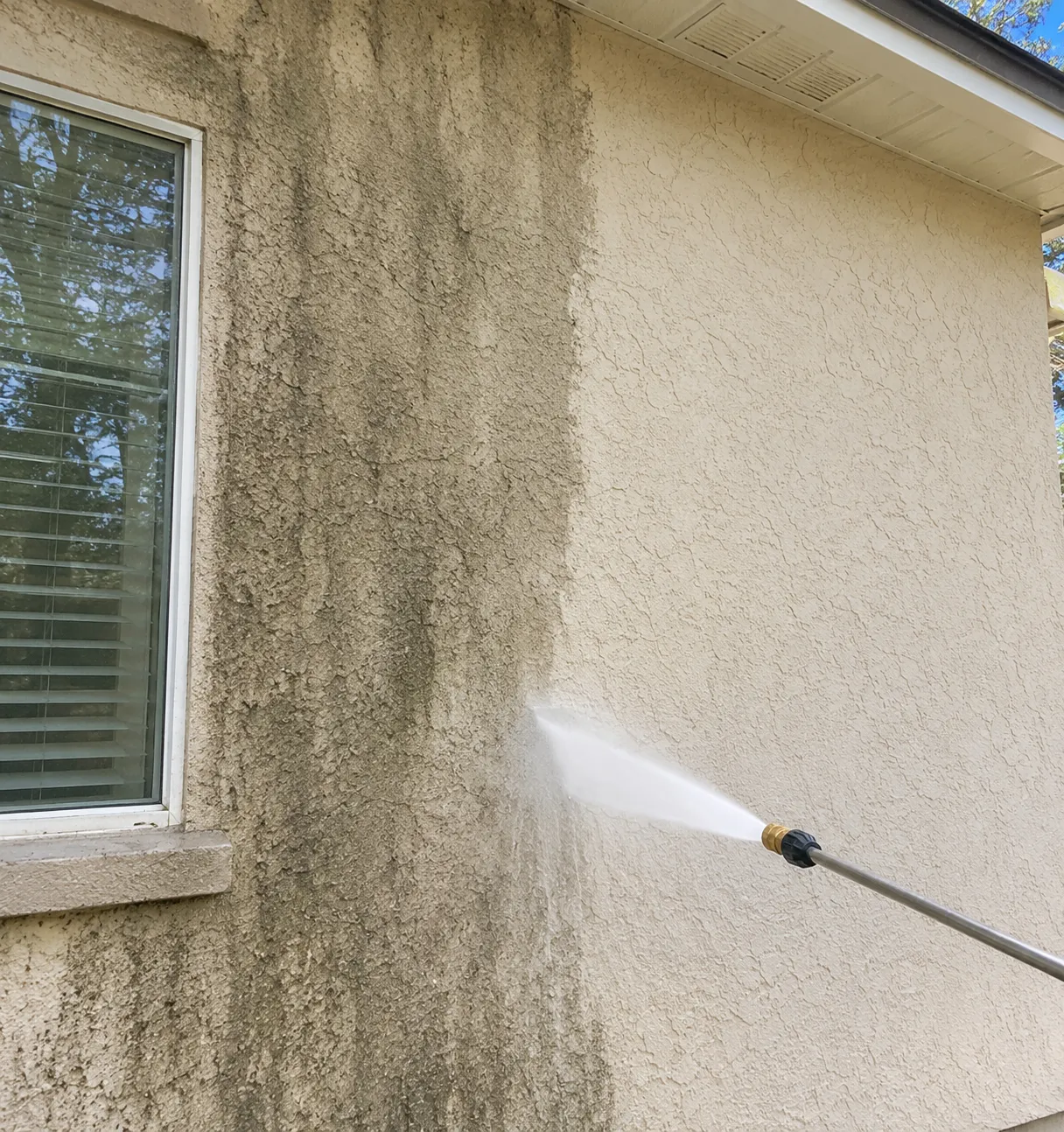
High pressure on vinyl, stucco, roofs or soft wood causes damage you'll pay for. Soft washing lets the chemistry do the cleaning on delicate surfaces, and pressure is for concrete and hard flatwork.
How to do it
- 1Soft wash siding, stucco, roofs and painted surfaces with a low-pressure system and the right mix.
- 2Use a surface cleaner on concrete for even results and no striping.
- 3Go low and wide on wood, and test in a hidden spot first.
- 4Never pressure wash asphalt shingles. It strips the granules and can void the warranty.
- 02
Protect plants, pets and the property
Dead shrubs and etched windows are the most common complaints in this trade. A simple routine before and after every job prevents almost all of them.
How to do it
- 1Pre-wet plants and grass, then rinse them again after you finish.
- 2Cover outlets, light fixtures and delicate plants, and close every window.
- 3Ask that pets and kids stay inside, and check for cars parked in the overspray.
- 4Walk the property with the customer first and photograph existing damage.
- 03
Price by surface, size and grime, with a minimum
Square footage plus condition is how most pros price, because it's fair and fast. A minimum charge keeps small jobs from costing you money once you count the drive and setup.
Automate it: Put an instant price on your site that uses your numbers for surface, size and grime, so homeowners get a range in thirty seconds and book without a callback.
How to do it
- 1Price flatwork per square foot, and house washes by size and stories.
- 2Add a grime factor for heavy algae, oil stains or rust.
- 3Set a minimum that covers setup, drive time and chemical even on a tiny job.
- 4Bundle the house, driveway and walkway at a slight discount to raise the ticket.
- 04
Get the right insurance and know the rules on runoff
One broken window or damaged car can wipe out a season. Many cities and states also limit wash water and chemicals going into storm drains, especially on commercial jobs.
How to do it
- 1Carry general liability, and commercial auto for the truck and trailer.
- 2Check your city's rules on wash water and storm drains before commercial work.
- 3Use drain covers and reclaim where it's required, and say so in your bids.
- 4Keep a certificate of insurance ready for property managers.
Part 2
Get found by homeowners and property managers
Pressure washing is a visual sell and a local one. Your best leads come from people who saw your work, either in person or on a phone.
- 05
Make your website a quote machine
Homeowners want a number before they'll talk to anyone. A site that gives them a price range in thirty seconds and lets them book converts far better than a contact form.
Automate it: Use a site with the instant price and booking built in, so a late-night search ends in a booking instead of a voicemail. Runza builds one from a short description of your business, on your own domain.
How to do it
- 1Put the instant price at the top, above the about section.
- 2Show services by surface: house, roof, driveway, deck, fence, gutters.
- 3Put your domain on the trailer, the truck and every door hanger.
- 06
Film the satisfying part
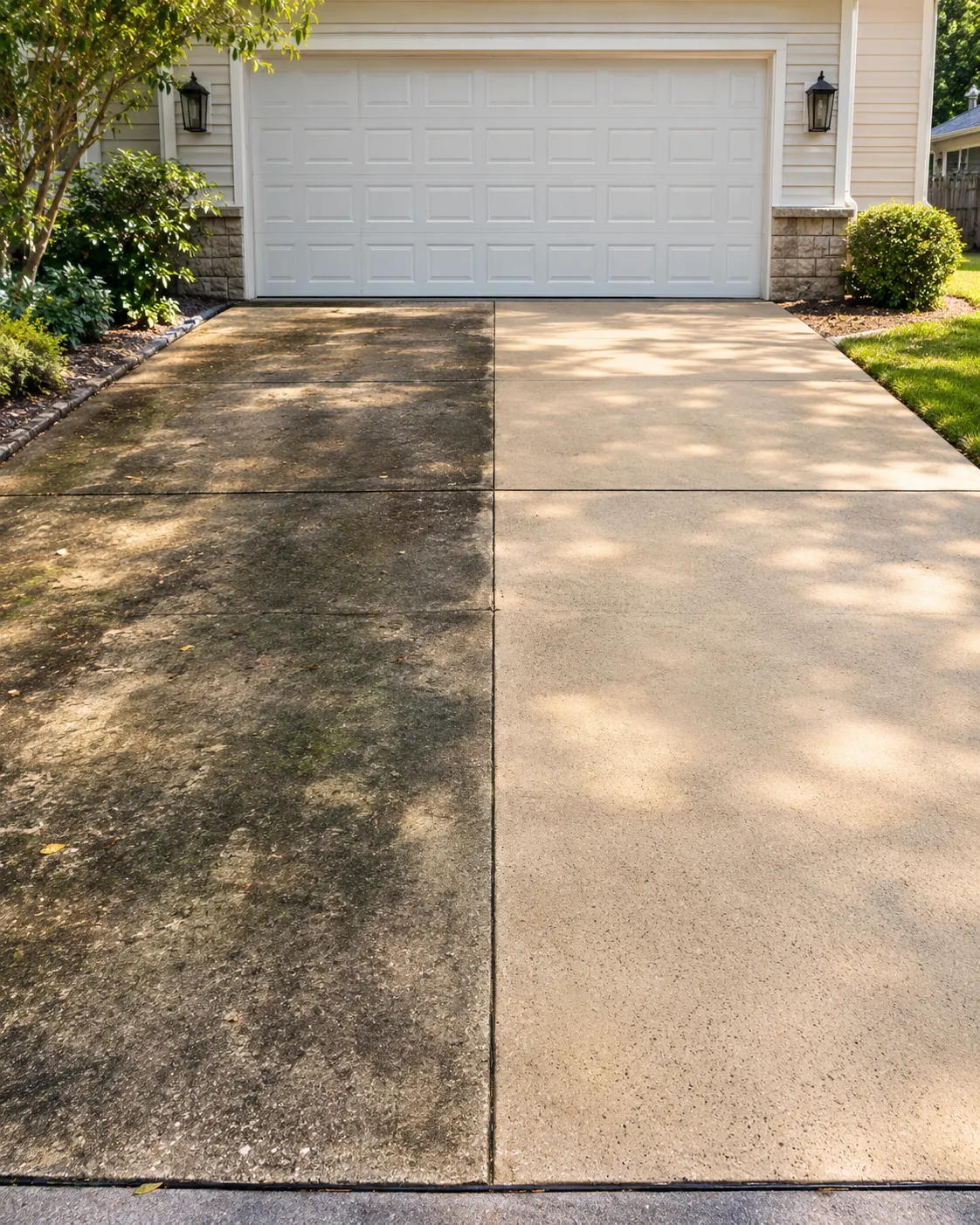
A surface cleaner pass on a dirty driveway is some of the most watched content in home services. Every job is free marketing if you film 20 seconds of it.
Automate it: Cut raw job videos into short, captioned clips for social the same day, so every job feeds your posts without an editing session.
How to do it
- 1Film the first pass on concrete from a low angle, where the line between dirty and clean is sharpest.
- 2Shoot the same angle before and after on houses and roofs.
- 3End with where you work and how to book.
- 07
Hit the neighbors while the driveway is still clean
The cleanest driveway on the street makes every neighbor's look worse. A door hanger campaign around each job is the cheapest lead source in the trade, and it builds route density.
Automate it: Give each campaign its own deal code that customers enter at booking, so you can see which streets the hangers paid off on.
How to do it+ a message to send
- 1Hang 10 to 20 door hangers around every job, the same day.
- 2Offer a neighbor deal with a code and a short deadline.
- 3Book those jobs on the same day or week to save the drive.
Door hanger copy We just washed your neighbor's [house / driveway] on [Street]. Want yours to match? Book by [date] with code [CODE] for [offer]. Get an instant price at [site].
- 08
Answer the questions every homeowner asks
Soft wash versus pressure, plants, pets, water and what happens if it rains. Answering them up front builds trust and cuts phone time.
Automate it: Publish the answers as an FAQ on your site and link it in your bio, voicemail greeting and booking confirmations, so people find the answer before they call.
How to do it
- 1Explain soft washing in two plain sentences.
- 2Say how you protect plants and what the customer needs to do.
- 3Say whether you need their water and outside outlet.
See it set up for your business, free
A mockup of your website and the back office behind it. No account needed.
Part 3
Book, bid and get paid
Residential pays the bills in season. Commercial keeps the lights on year round. Each needs its own process.
- 09
Book with the address and the surfaces
Knowing exactly what's being washed and where lets you load the right gear and chemical, quote accurately and fit the job into a route.
Automate it: Make the address, the surfaces and the deal code fields on the booking form, so every job lands on the calendar ready to route.
How to do it
- 1Ask for the address, the surfaces, the stories and any problem spots.
- 2Look the property up on a map to confirm size before the day.
- 3Book mornings by area to keep drive time down.
- 10
Bid commercial work with a site survey
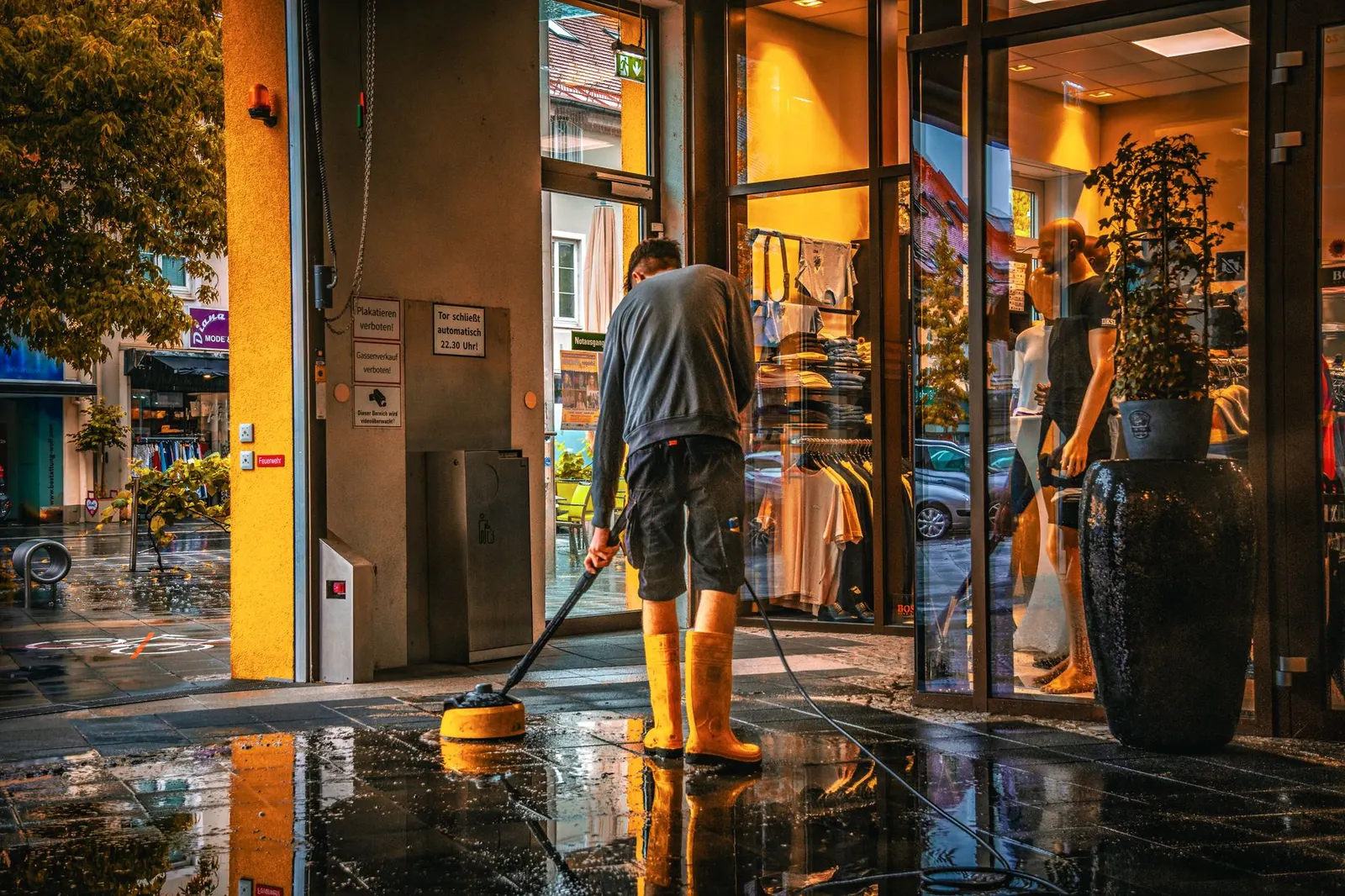
Storefronts, restaurants, gas stations, HOAs and apartment complexes pay on a schedule, often monthly or quarterly. They expect a survey, proof of insurance and a clear scope.
Automate it: Use a survey request that asks for the property, the surfaces and how often, so property managers send everything you need to bid in one go.
How to do it
- 1Walk the property and measure every surface in scope.
- 2Price per visit and per frequency, with a lower rate for a recurring contract.
- 3Spell out timing (often overnight or before opening), reclaim and what isn't included.
- 4Send the bid within 48 hours with your insurance certificate attached.
- 11
Get paid the day the job is done
Most residential customers aren't home when you finish. Sending a payment link with the after photos gets you paid the same day without chasing anyone.
Automate it: Send the after photos with a payment link from the driveway, so the job is paid before you reach the next one.
How to do it+ a message to send
- 1Send the after photos and the payment link before you leave the street.
- 2Take a deposit on large jobs and commercial first visits.
- 3Put net terms in writing for commercial accounts.
Job-done text Hi [Name], your [house wash / driveway] is done. Photos attached. Here is your invoice for [$amount]: [link]. Thanks for having us, and let us know if anything needs a second look.
Part 4
Follow up so they book every season
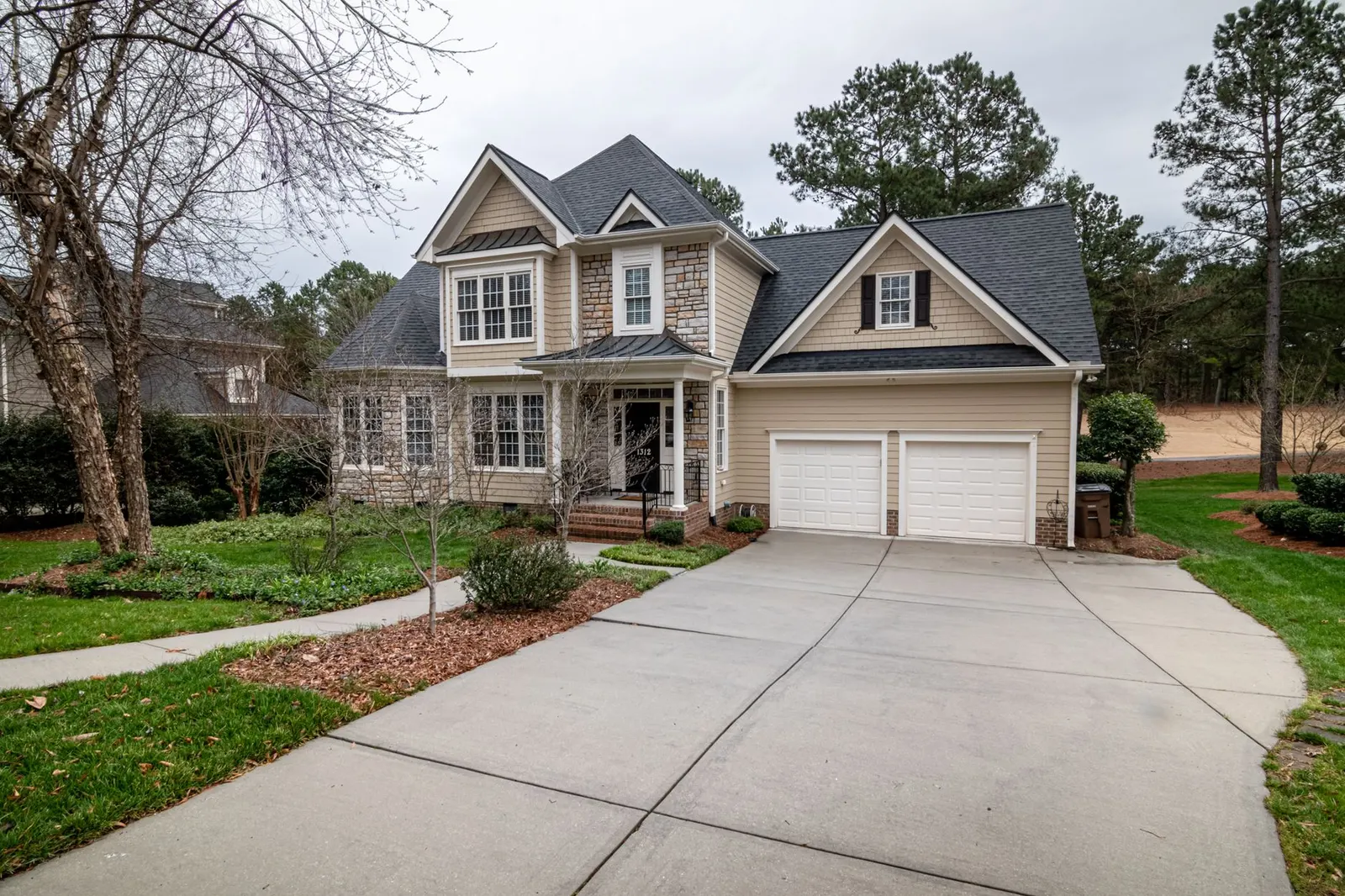
Grime comes back on a schedule. The company that reaches the customer first each spring gets the job, and last year's customers are the easiest bookings you'll ever make.
- 12
Remind last year's customers before the season
Homeowners don't think about the house until it looks bad, and then they search. A reminder in late winter puts you on the calendar before the search starts.
Automate it: Send the reminder automatically about a year after each job, timed for late winter and late summer, so last year's customers book before the season fills.
How to do it+ a message to send
- 1Send reminders in late winter for spring jobs and late summer for fall jobs.
- 2Mention the surfaces you did last time and anything you noticed.
- 3Offer early-booking slots to fill your first weeks.
Spring reminder Hi [Name], it's [You] from [Business]. It's been about a year since we washed your [house / driveway]. Spring spots are filling. Want us to put you on the calendar for [month]? [link]
- 13
Offer an annual plan at the end of the job
A customer who agrees to a yearly wash at the right moment saves you a year of marketing. It also lets you plan your season around booked work.
How to do it
- 1Offer the plan during the final walk-around, with the clean house in front of them.
- 2Price it slightly below a one-off job, with a date range, not a date.
- 3Add gutters, windows or a roof treatment as an optional add-on.
- 14
Ask for the review with the after photo
Reviews with photos convert better than any ad. The best time to ask is when the customer first sees the result.
How to do it+ a message to send
- 1Send the after photo and the review link the same day.
- 2Reply to every review, and mention the street or neighborhood.
Review ask Thanks again, [Name]. Here's the before and after of your [surface]. If you're happy with it, a quick review helps your neighbors find us: [link]
See these steps running
Walk through the back office of Blue Line Exterior Wash, a sample business: the schedule, follow-ups, invoices and site. Made-up data, no sign-up.
Part 5
Grow without working every hour
Growth in this trade comes from route density, recurring commercial work and a second rig. Each one adds revenue without adding miles.
- 15
Build route density in the neighborhoods you already work
Five jobs on one street pay more than five jobs across the county. Every hour you don't spend driving is an hour you can bill.
How to do it
- 1Map last season's jobs and pick the three densest neighborhoods.
- 2Focus door hangers, deals and ads there first.
- 3Approach HOAs in those neighborhoods about community-wide days.
- 16
Pick three moves every week
The best owners decide what to push next from what the numbers say, not from a hunch. Three moves a week, actually done, beat a long list nobody touches.
Automate it: A weekly review that reads your bookings and customer list can suggest the three moves for you, like a deal for a slow week or customers due for a wash.
How to do it
- 1Look at last week's quotes, bookings and which neighborhoods they came from.
- 2Pick the three things most likely to move them: a deal, a door hanger street, a list of customers due again.
- 3Check next week whether they worked.
- 17
Give your crew their own logins
When a second rig goes out, the crew needs the day's addresses and job notes without your password. Separate access keeps things clean as you grow.
Automate it: Add each person as a teammate on your booking and customer tools instead of sharing the owner's login, and remove access the day someone leaves.
The short version
Match the method to the surface, price fast with a minimum, hang door hangers around every job and remind every customer before the season. Do that and the calendar fills itself each spring.