Start this week
Five moves that pay off before you read another word. The rest of the guide explains each one.
- 1Cost your five best-selling dishes down to the garnish.
- 2Write down your event minimum and make it easy to find.
- 3Reply to every open inquiry today, even if it's just to set a call.
- 4Stop holding dates without a retainer, starting with the next inquiry.
- 5List every client who booked a holiday party last year and reach out now.
Numbers to know
28 to 35%
A common food cost target, as a share of the food price you charge.
25 to 50%
A common retainer to hold a date, with the balance due before the event.
7 to 14 days
A common deadline for the final guest count before the event.
18 to 22%
A common service charge on full-service events, kept separate from gratuity.
1 per 20 to 25
A common server-to-guest ratio for a buffet. Plated service often needs one per 10 to 15.
Part 1
Build a menu and prices that make money
Most catering businesses that fail are busy. They price by gut, give away labor and rentals, and find out at tax time that the big events lost money.
- 01
Cost every dish before you price it
Food cost is the number your business runs on. If you don't know what a portion costs, you can't know whether an event made money.
How to do it
- 1Write a recipe card for each dish with every ingredient, the amount and the price you pay.
- 2Divide by the portions it yields to get the cost per portion, and add a little for waste.
- 3Price so food cost lands in your target range, often 28 to 35% of the food price.
- 4Recost your menu every quarter. Protein and produce prices move fast.
- 02
Price per guest by service style, with a minimum
A drop-off tray, a staffed buffet and a plated dinner are different businesses. Pricing them per guest, by style, lets clients compare and keeps small events from costing you money.
Automate it: Put a price estimator on your site that works from guest count, menu and service style. Clients see a realistic range before they reach out, and the ones who can't afford you filter themselves out.
How to do it
- 1Set a per-guest price for each service style: drop-off, buffet, family style and plated.
- 2Set a minimum, by guest count or by total spend, for each one.
- 3Price staff, rentals and travel as their own lines, not buried in the food.
- 4Add a service charge on full-service events and say what it covers.
- 03
Get licensed and insured before you cook for the public
Health departments, venues and corporate clients will ask for your license and certificate of insurance. Having them ready wins jobs and keeps you open.
How to do it
- 1Cook in a licensed commercial kitchen, your own or a rented commissary.
- 2Get your food handler and food manager certifications.
- 3Carry general liability insurance, and liquor liability if you serve alcohol.
- 4Keep a certificate of insurance ready to send. Most venues require one.
- 04
Publish menus clients can actually choose from
A menu with 60 dishes slows decisions and complicates your kitchen. A tight menu with clear packages and add-ons books faster and cooks better.
Automate it: Keep your menus online with per-guest prices and add-ons, rather than in PDFs you email around. When a dish changes, you change it once and every client sees the current version.
How to do it
- 1Build three or four packages per service style, with a set number of choices.
- 2List add-ons with their prices: desserts, late-night snacks, bar service.
- 3Mark allergens and dietary options clearly.
Part 2
Get found by the people who book events
Most catering is booked through a few doors: search, venues, planners and past guests who loved the food. Be easy to find at every one of them.
- 05
Make your site the place to start an inquiry
People planning an event compare caterers late at night. The one with clear menus, a price range and an easy way to inquire gets the first call.
Automate it: A site with menus, prices and an inquiry form keeps taking leads while you're in the kitchen. Runza builds one from a short conversation about your food and events, on your own domain.
How to do it
- 1Lead with your best food photos, then menus, prices and how to inquire.
- 2Use your own domain and put it on your van, your cards and your labels.
- 3Show the events you do and the area you cover.
- 06
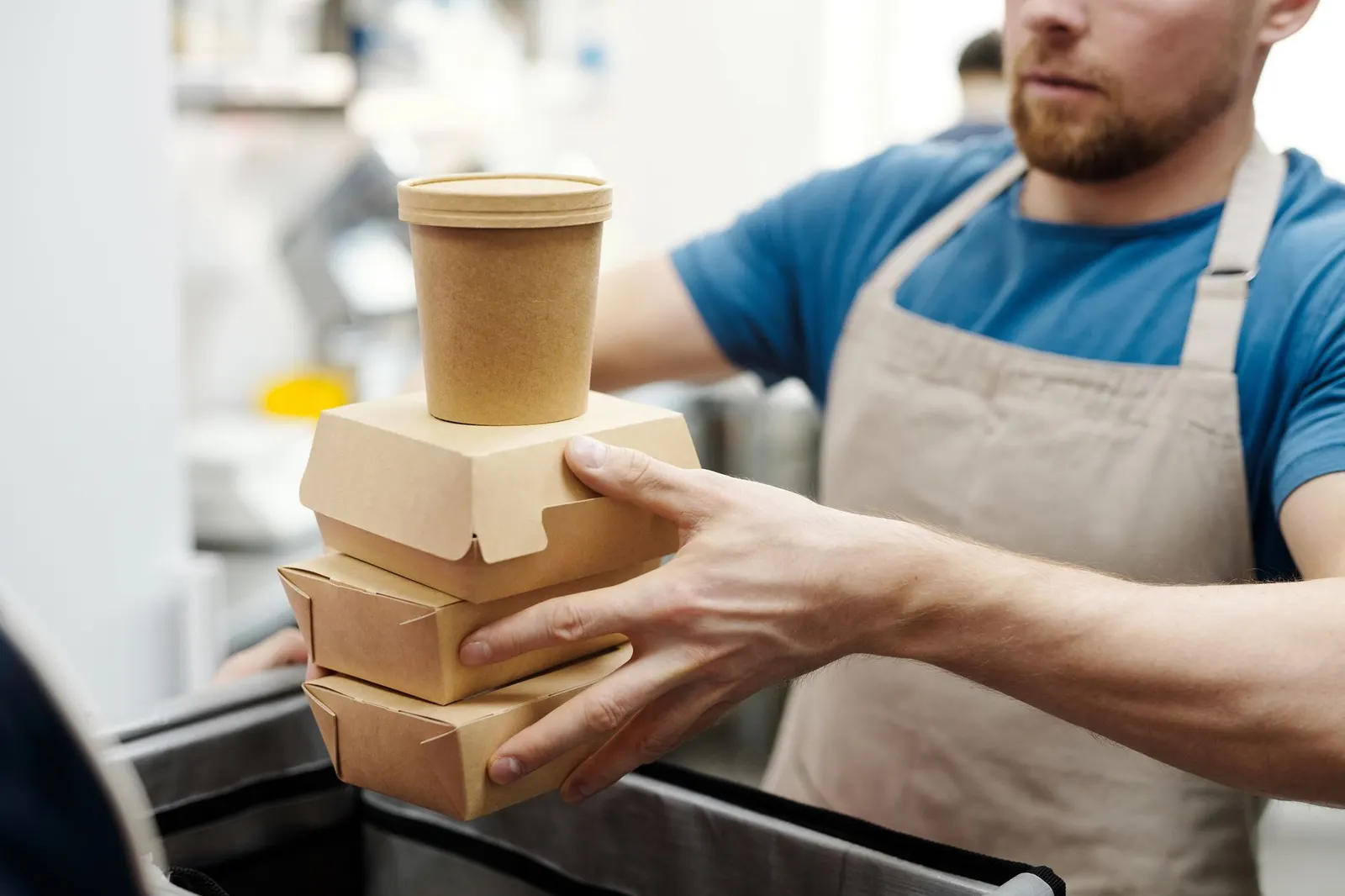
Sell drop-off boxes as your front door
Office lunches and party packs bring in steady weekday revenue and introduce your food to people who later book weddings and galas. They should be easy to order without a call.
Automate it: Let clients order and pay for boxes and party packs online, so small orders don't need a phone call or an invoice.
How to do it
- 1Pick a few items that travel well and hold their quality.
- 2Set an order lead time and a delivery fee.
- 3Put a card in every box that points to your full-service menus.
- 07
Post kitchen and event videos
Food sells through the eyes. A ten-second clip of a carving station or plating a course does more than a page of menu copy.
Automate it: Film longer clips during the event and let software cut them into short, captioned posts afterward. One evening of footage covers a week of social.
How to do it
- 1Film prep, plating and the setup, not just finished trays.
- 2Get the host's permission before showing guests.
- 3Post the week of a big event while the clips are fresh.
- 08
Answer the same questions once
Minimums, allergies, staff, rentals, deposits and travel make up most of your emails. Answering them up front means the inquiries you get are already qualified.
Automate it: Write the FAQ once, then add a chat assistant to your site that answers menu and date questions from it at any hour.
How to do it
- 1List the questions you've answered more than three times this month.
- 2Answer each in two or three sentences, including your minimums.
- 3Link the FAQ in your inquiry auto-reply.
- 09
Get on venue and planner preferred lists
Many venues hand couples a short list of approved caterers. Being on it can fill your calendar more than any ad.
How to do it
- 1Visit the venues you want to work, learn their kitchen and load-in rules, and ask how to get on the list.
- 2Send venue managers and planners photos from events at their space.
- 3Make the venue look good: on time, clean load-out, no surprises.
See it set up for your business, free
A mockup of your website and the back office behind it. No account needed.

Part 3
Turn inquiries into booked, paid events
A date is only booked when the retainer is paid. Until then, you're holding inventory for someone who may be talking to three other caterers.
- 10
Reply to every inquiry the same day
Event clients usually contact several caterers at once. The first thoughtful reply, with a price range and a next step, often wins.
Automate it: Have every inquiry land in one list with the date, guest count, venue and diets, so nothing sits in a DM and you can reply with substance the first time.
How to do it+ a message to send
- 1Collect the date, guest count, venue, service style and diets in the first form.
- 2Reply with a ballpark per-guest range and two or three menu suggestions.
- 3End with one clear next step: a call or a tasting.
First reply to an inquiry Hi [Name], thank you for thinking of [Company] for your [event] on [date]! For [guests] guests with [service style], most of our clients spend [range] per guest. I've attached two menus I think would fit. Do you have 15 minutes on [day] to talk it through?
- 11
Use tastings to close, not to feed shoppers
A free tasting for anyone who asks becomes a cost center. A tasting for serious clients, credited back when they book, turns into signed events.
How to do it
- 1Offer tastings after a call, once the date and budget fit.
- 2Charge a tasting fee and credit it to the event if they book.
- 3Bring the proposal to the tasting and ask for the retainer before they leave.
- 12
Take a retainer before you hold the date
A date held on a handshake is a date you can't sell to someone else. A retainer by card, with the terms in writing, is what makes the booking real.
Automate it: Turn the inquiry straight into an invoice the client pays online by card, so the retainer arrives the same day the proposal does.
How to do it+ a message to send
- 1Send the proposal and the retainer invoice together.
- 2Hold the date for a short window, often a few days, then release it.
- 3Put the payment schedule in writing: retainer now, balance before the event.
Retainer email Hi [Name], here is your proposal for [event] on [date], along with the retainer invoice for [amount]. Once it's paid, your date is officially held. The balance of [amount] is due [days] before the event, along with your final guest count.
- 13
Lock the final count and the balance before you shop
Last-minute guest changes and unpaid balances are where caterers lose the most. A firm deadline protects your food order and your staffing.
How to do it
- 1Set a final count deadline, often 7 to 14 days out, and bill to that number even if fewer show.
- 2Collect the balance by the same date, before you buy food.
- 3Confirm the timeline, the venue contact and the load-in time in writing.
Part 4
Follow up so last year's clients book again
Holiday parties, annual galas and family milestones come back every year. The caterer who calls first usually gets them.
- 14
Send a thank-you the week after
A short note after the event shows you care, catches any issue before it becomes a bad review, and is the best moment to ask for a referral.
How to do it+ a message to send
- 1Send it within a few days, while the event is fresh.
- 2Ask what they loved and what you could do better.
- 3Ask if they know anyone planning an event.
Thank-you note Hi [Name], thank you for having us at [event]. Our team loved being part of it. If there's anything we could have done better, I'd like to know. And if a friend or colleague is planning something, we'd be grateful for the introduction.
- 15
Remind clients before their date comes around again
Office holiday parties are often booked months ahead. If you wait for the client to remember you, a competitor will have called first.
Automate it: Set reminders to go out on their own ahead of each annual client's date, so last year's holiday party is back on your calendar before a competitor calls.
How to do it
- 1Reach out to every annual client two to three months before their date.
- 2Mention what they had last year and suggest something new.
- 3Offer to hold the same date with a retainer.
- 16
Keep every client's history in one place
Knowing that the office downtown ordered the short rib and has two vegan guests makes the next booking a five-minute conversation.
Automate it: Let every inquiry and order add the client to one list automatically, so their history is waiting when they come back.
How to do it
- 1Note the menu, the guest count, the diets and what got raves after every event.
- 2Note the venue and any quirks of the space.
- 3Look it up before you reply to a returning client.
See these steps running
Walk through the back office of Olive and Ash Catering, a sample business: the schedule, follow-ups, invoices and site. Made-up data, no sign-up.
Part 5
Grow without burning out the kitchen
More events only helps if each one is profitable and your team can run them without you on every call.
- 17
Review your events after every season
Owners who grow decide what to do next from what's working. Looking back at a season of events shows which menus, sizes and clients actually made money.
Automate it: Tools that read your inquiries and client list can point out your next few moves, like annual clients due for a call or a menu that needs updating.
How to do it
- 1Compare the actual food and labor cost of your ten biggest events against what you charged.
- 2Drop or reprice the menus that ran over.
- 3List the annual clients you need to call before next season.
- 18
Give your event lead and kitchen their own logins
Once you have an event lead and a kitchen manager, they need to see orders and events without sharing your login.
Automate it: Add your event lead and kitchen as teammates with separate logins instead of sharing one password.
How to do it
- 1Decide who sees what: the event lead needs inquiries and events, the kitchen needs orders.
- 2Keep payments under the owner's login.
- 3Remove access the day someone leaves.
The short version
Cost every dish, price per guest with a minimum, reply the same day and never hold a date without a retainer. Then call last year's clients before anyone else does.